
Air Fryer vs. Conventional Oven – Understanding the Difference
Conventional Ovens have long been a staple in kitchens, providing a versatile way to bake, roast, and broil a wide range of dishes. However, in recent years, the rise of air fryers has sparked a debate among home cooks about the most efficient way to achieve crispy, delicious results. In this informative post, we will explore the key differences between air fryers and conventional ovens, helping you make an informed decision about which cooking method is best suited to your culinary needs.

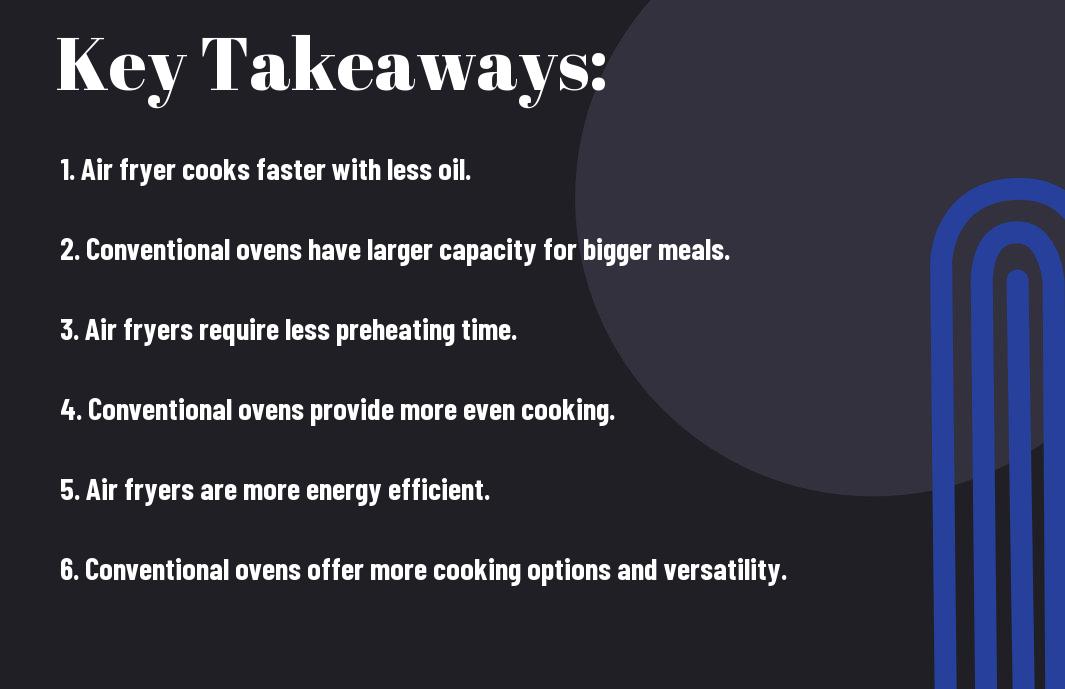
Key Takeaways:
- Air Fryer Versatility: Air fryers use rapid air technology to mimic the frying process without submerging food in oil, resulting in healthier meals.
- Conventional Oven Benefits: Conventional ovens offer more cooking space and are suitable for a wide range of cooking methods, including baking, roasting, and broiling.
- Cooking Time and Efficiency: Air fryers generally cook faster and more efficiently than conventional ovens, making them ideal for quick and crispy meals.
Air Fryer Technology
How Air Fryers Work
It is crucial to understand that air fryers work by circulating hot air around the food at high speed, creating a crispy layer on the outside while cooking the inside thoroughly. This process mimics deep frying but with significantly less oil, making it a healthier cooking alternative.
Advantages of Using an Air Fryer
On the plus side, air fryers offer several advantages, including faster cooking times, energy efficiency, and versatility in preparing a variety of dishes. They also help reduce overall oil consumption in cooking, promoting healthier eating habits.
Air fryers also eliminate the need for excessive oil, lowering the calorie content of fried foods and making them a more attractive option for health-conscious individuals. Additionally, air fryers are relatively easy to clean compared to traditional deep fryers, as they don’t involve dealing with large amounts of hot oil.
Limitations of Air Fryers
One of the limitations of air fryers is their smaller capacity compared to conventional ovens or deep fryers, making it challenging to cook for large groups. Additionally, certain foods may not achieve the same texture or taste as traditional deep-fried versions when cooked in an air fryer.
Fryers also tend to produce some level of noise during operation due to the high-speed fan circulating the hot air. While this noise may not be overly loud, it can be a consideration for those sensitive to sound in the kitchen.
Conventional Oven Technology
How Conventional Ovens Work
For those wondering about the difference between an oven’s “Air Fry” and “Convection“, understanding the basic mechanics of a conventional oven is key. Conventional ovens rely on heating elements located at the top and bottom of the oven to generate heat. This heat is then circulated by natural convection, where the hot air rises and cooler air falls, creating a consistent temperature throughout the oven.
Advantages of Using a Conventional Oven
To fully appreciate the advantages of using a conventional oven, one must acknowledge its versatility. Conventional ovens excel at baking, roasting, broiling, and more, making them a staple in any kitchen. The ability to cook a wide variety of dishes with reliable and consistent results is a significant advantage that conventional ovens offer.
Conventional ovens also provide a larger cooking capacity compared to most air fryers, allowing you to prepare meals for larger gatherings or cook multiple dishes simultaneously. Additionally, conventional ovens are more readily available in most households, making them a convenient choice for everyday cooking needs.
Limitations of Conventional Ovens
Conventional ovens, while versatile, do have their limitations. One of the main drawbacks is the longer preheating time required for conventional ovens to reach the desired temperature. This can extend the overall cooking time, especially for time-sensitive recipes or when you’re in a hurry.
Plus, conventional ovens can result in uneven cooking at times, requiring you to rotate dishes for even browning or cooking. This extra attention to placement and rotation may be a factor to consider when using a conventional oven for certain recipes.
Comparative Analysis
All Air Fry vs. Convection: Which Oven Setting is Better? [Bonus
| Energy Efficiency | Cooking Times |
Energy Efficiency
To determine the energy efficiency between an air fryer and a conventional oven, it’s imperative to consider the wattage and cooking times of each appliance. Air fryers typically require less energy to operate due to their smaller size and quicker preheating times compared to conventional ovens.
Cooking Times
For cooking times, air fryers excel in speeding up the process compared to conventional ovens. Air fryers use rapid air technology to circulate hot air around the food, resulting in faster and more even cooking. This feature makes air fryers ideal for busy individuals or quick meals.
Quality of Final Dish
Analysis of the quality of the final dish in both appliances is crucial. While air fryers produce crispy and evenly cooked food due to their rapid air circulation, conventional ovens offer a traditional baking method that may result in a more moist and tender final dish.
A versatile cooking appliance can make meal preparations more convenient. Air fryers have gained popularity for their ability to not only air fry but also roast, bake, grill, and even reheat food items. This versatility adds value to the appliance by providing a range of cooking options in one device.
The versatility in cooking methods offered by air fryers can cater to a wide range of cooking needs, from quick snacks to full meals. The ability to adjust temperature settings and cooking methods in an air fryer provides flexibility in experimenting with different recipes and cooking styles. The convenience of a multi-functional appliance enhances the overall cooking experience.
User Experience and Maintenance
Ease of Use
Experience with an air fryer is often preferred by users due to its simplicity. Air fryers usually come with easy-to-use digital controls and presets that make cooking a breeze. In comparison, conventional ovens can be more complex to operate, requiring users to set the temperature and timer manually.
Cleaning and Maintenance
Any appliance that involves cooking can get messy, and both air fryers and conventional ovens require cleaning. Air fryers, however, are generally easier to clean than traditional ovens. Many air fryer models have removable parts that are dishwasher safe, making cleanup a quick task. In contrast, conventional ovens may need more time and effort for cleaning due to their size and design.
The ease of cleaning an air fryer makes it a popular choice for those looking for low-maintenance kitchen appliances. Regular cleaning and maintenance can prolong the lifespan of your air fryer and ensure that it continues to function efficiently.
Safety Considerations
User safety is crucial when it comes to using kitchen appliances like air fryers and conventional ovens. While both appliances have safety features in place, air fryers are generally considered safer due to their enclosed design and the absence of open flames. Conventional ovens, on the other hand, can pose a higher risk of burns and accidents due to their exposed heating elements.
Plus, air fryers often have automatic shut-off features that prevent overheating, adding an extra layer of safety for users. When using any kitchen appliance, it is crucial to follow the manufacturer’s instructions and safety guidelines to prevent accidents and ensure a smooth cooking experience.
Conclusion
Following this comparison between air fryers and conventional ovens, it is clear that both appliances have their own set of advantages and limitations. Air fryers are great for cooking crispy, healthier versions of your favorite fried foods in less time, while conventional ovens offer more versatility for baking, roasting, and broiling a wider variety of dishes. Understanding the difference between the two can help you make an informed decision based on your cooking preferences and needs.
FAQ
Q: What is an air fryer?
A: An air fryer is a kitchen appliance that cooks by circulating hot air around the food at high speed, resulting in a crispy outer layer. It requires little to no oil to achieve the same crunchy texture as deep frying.
Q: What is a conventional oven?
A: A conventional oven is a kitchen appliance that uses heating elements to heat the air inside the oven. It is versatile and can be used for baking, roasting, broiling, and more.
Q: What are the key differences between an air fryer and a conventional oven?
A: The main difference is the cooking method – air fryers use rapid air technology to cook food quickly and evenly, while conventional ovens rely on heating elements to cook food at a slower pace. Additionally, air fryers require little to no oil, making them a healthier alternative to deep frying.
Q: Which is better for health-conscious individuals – an air fryer or a conventional oven?
A: For health-conscious individuals, an air fryer is often a better option as it requires less oil for cooking, resulting in lower fat content in the food. It is a healthier alternative to deep frying and can still achieve a crispy texture.
Q: Can both an air fryer and a conventional oven be used for a variety of cooking methods?
A: Yes, both appliances are versatile and can be used for various cooking methods. While an air fryer is great for quick and crispy results, a conventional oven offers more cooking space and flexibility for baking, roasting, broiling, and more.
